Can a Reading Prescription Have Both a Positive and Negative Sphere
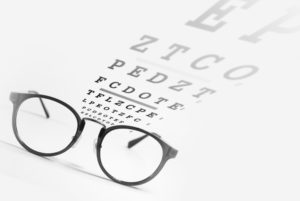
Abbreviations in your eyeglass prescription are based on Latin roots, and it tin can be challenging to decipher them.
SPH, referring to sphere, is an abbreviation you'll meet on all eyeglass prescriptions. It is listed as a positive or negative number, and it indicates the power of correction y'all need.
In add-on to SPH, there are many more abbreviations y'all'll notice on your glasses prescription. These abbreviations provide information about each eye, the power of correction yous need, the type of vision problem you are dealing with, the measurements of various distances, and other information.
Contact lens prescriptions accept many of the same abbreviations equally eyeglass prescriptions, with a few additional numbers. The base curvature and diameter of the lens are indicated on a contact lens prescription, equally are the expiration engagement and brand of lens.
The numbers on your eyeglass or contact lens prescription provide of import information nigh your eye conditions. The presence of certain values — such equally cylinder, axis, or add ability — informs anyone reading your prescription virtually the presence of conditions like astigmatism, nearsightedness, and farsightedness, or the need for bifocal or multifocal lenses.
Comprehensive middle exams are the only fashion to ensure that you are getting the correct glasses prescription and vision correction. Directly post-obit an exam, your ophthalmologist can provide you with a prescription and bring you 1 step closer to achieving articulate vision.
What Is SPH?

Sphere (SPH) on your eyeglass prescription refers to the corporeality of lens that is needed to bring your vision dorsum to normal. It is measured in diopters and suggests that y'all need a spherical correction for your sight.
An SPH number indicates if you are farsighted or nearsighted. If the SPH value is 0.00, or noted by Plano, Pl, or an infinity sign, y'all do non take a vision distance problem. Typical SPH numbers range between 0.00 and +/- twenty.00.
The SPH number on a spectacles prescription is listed as a positive (+) or negative (-) number. A negative number means that the lens is correcting for nearsightedness, while a positive number indicates a prescription for farsightedness.
The higher the SPH number, the stronger your prescription is, explains the American Academy of Ophthalmology (AAO).
Abbreviations for Glasses Prescriptions
In addition to SPH, many other abbreviations are included in an eyeglass prescription. Fortunately, the abbreviations have been standardized around the world, so yous can take your eyeglass prescription to become a replacement prepare of spectacles fifty-fifty when traveling or living abroad.
Here are the nigh mutual abbreviations:
- OD: This stands for oculus dexter, indicating the right heart.
- OS: This stands for oculus sinister, indicating the left eye.
- OU: This stands for oculi uterque, indicating both eyes.
- PWR: Curt for power, PWR can be a positive or negative number referring to the corrective lens power needed. It is closely related to SPH.
- ADD: Brusque for improver, Add refers to the power that needs to be added to the lens to improve near vision.
- CYL: Brusk for cylinder, CYL indicates a correction for astigmatism. It is usually a number between -4.0 and +4.0.
- AX: An abbreviation for axis, AX is a number betwixt 0 and 180 that indicates the angle between the two meridians of an astigmatism.
- SVD: This stands for single vision distance, which is needed for the correction of altitude vision simply.
- SVN: This is curt for single vision nigh, which is needed for the correction of well-nigh vision but.
- PD: This stands for pupillary altitude, which represents the measurement of the distance (in millimeters) between the heart of each pupil. It is essential for creating effective and comfortable glasses. Average PD is 62 mm for women and 64 mm for men, with an overall range of 58 to 68 mm.
- BVD: This is short for back vertex altitude. BVD is the altitude from the back of your glasses lens to the apex of your cornea, and it is adapted to change the lens power.
You will not find all of the to a higher place abbreviations on every eyeglass prescription. Merely the abbreviations applicable to your eye condition volition exist listed.
Numbers are besides likely to vary between each centre and tin change over time. Keeping your eyeglass prescription up-to-date is essential for maintaining constructive corrective eyewear.
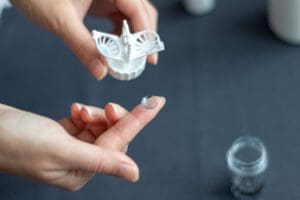
Contact lens prescriptions provide the same information as eyeglass prescriptions, with the add-on of some actress numbers.
The size of the lens, for example, is included for contact lenses. Because contact lenses sit directly on your middle rather than a few centimeters away, the ability of a contact lens will also likely be different than an eyeglass prescription for the aforementioned person.
Boosted information provided on a contact lens prescription includes:
- BC, which is the base curvature of the lens.
- DIA, which is the diameter of the lens.
- An expiration engagement.
- Dissimilar parameters for each heart.
- The brand of contact lens.
The base curve value of a contact lens typically ranges from 8.0 to ten.0. Base curves vary by brand, so your prescription may change depending on what brand of lenses you are using.
Diameter values range between xiii and 15. Information technology is possible to use a different make of contact lens in each eye based on the unique needs of each centre.
Prescription Numbers for Certain Centre Conditions
Many of the abbreviations in glasses and contact lens prescriptions are associated with numbers. Each number indicates data most your middle, vision, and how much correction is needed to achieve articulate vision.
Certain abbreviations and numbers refer to specific eye weather condition, such equally the following:
- CYL and AX values for toric or astigmatism correction.
- Add together values for "add together power" or "extra strength" for bifocal or multifocal lenses.
- SPH values for nearsightedness or farsightedness.
- A prism value is given to people with focusing disorders, such as crossed optics, and helps to readapt images into the proper direction.
The presence of these numbers in your eyeglass prescription provides information about your vision status and what you need correction for. An eye care professional can identify these values and ensure that you are fitted with proper corrective eyewear.

Getting the Right Glasses Prescription
In gild to become an accurate eyeglass prescription, yous will need to see an eye care professional who can perform a complete center examination.
Co-ordinate to AAO, all adults should receive a comprehensive middle exam by the age of 40. At 40, many early on warning signs of illness and eye problems start to appear.
You do not need to look until y'all are 40 to get your starting time eye exam. People with a history of diabetes, high blood force per unit area, and a family history of eye illness are encouraged to encounter an ophthalmologist for vision screenings sooner. For people already using corrective eyewear, it is wise to get an updated prescription each year.
One time your centre exam is complete, your eye md should be able to give you an accurate eyeglass or contact lens prescription correct away.
References
Eye Exam and Vision Testing Basics. (Dec 2018). American Academy of Ophthalmology.
What Do Astigmatism Measurements Mean? (Baronial 2018). American University of Ophthalmology.
How to Read Your Contact Lens Prescription or Rx. Davis Vision.
How to Read and Eyeglass Prescription. (October 2019). Verywell Health.
How to Read Your Eyeglass Prescription. WebMD.
The data provided on this page should not be used in identify of information provided by a doctor or specialist. To larn more, read our Privacy Policy and Editorial Policy pages.
Source: https://www.nvisioncenters.com/glasses/sph-prescription-definitions/
0 Response to "Can a Reading Prescription Have Both a Positive and Negative Sphere"
Post a Comment